 Back to Culture & Heritage
Olduvai Gorge & Museum
Overview & Highlights
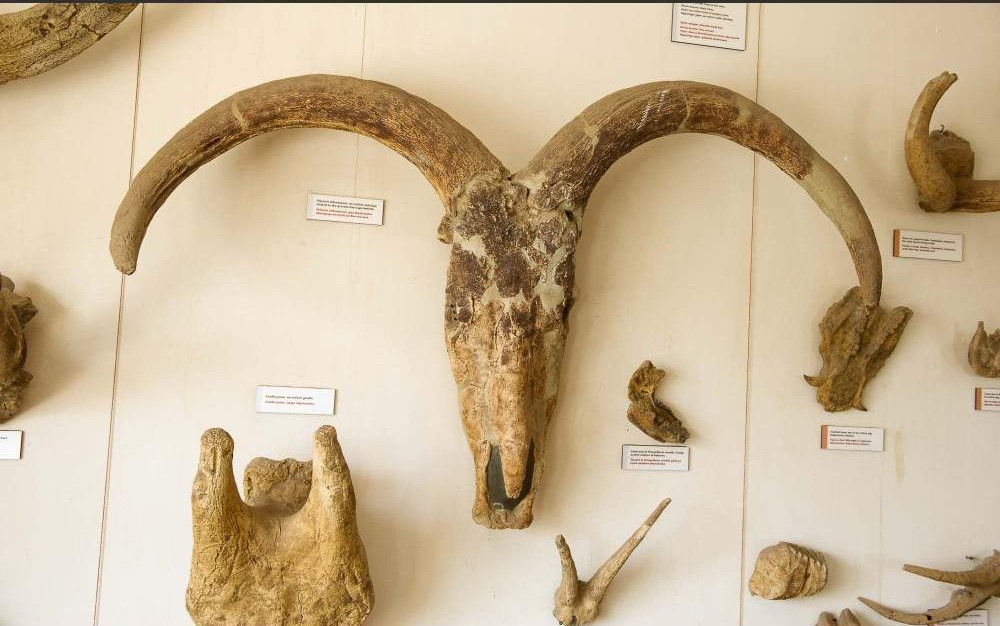
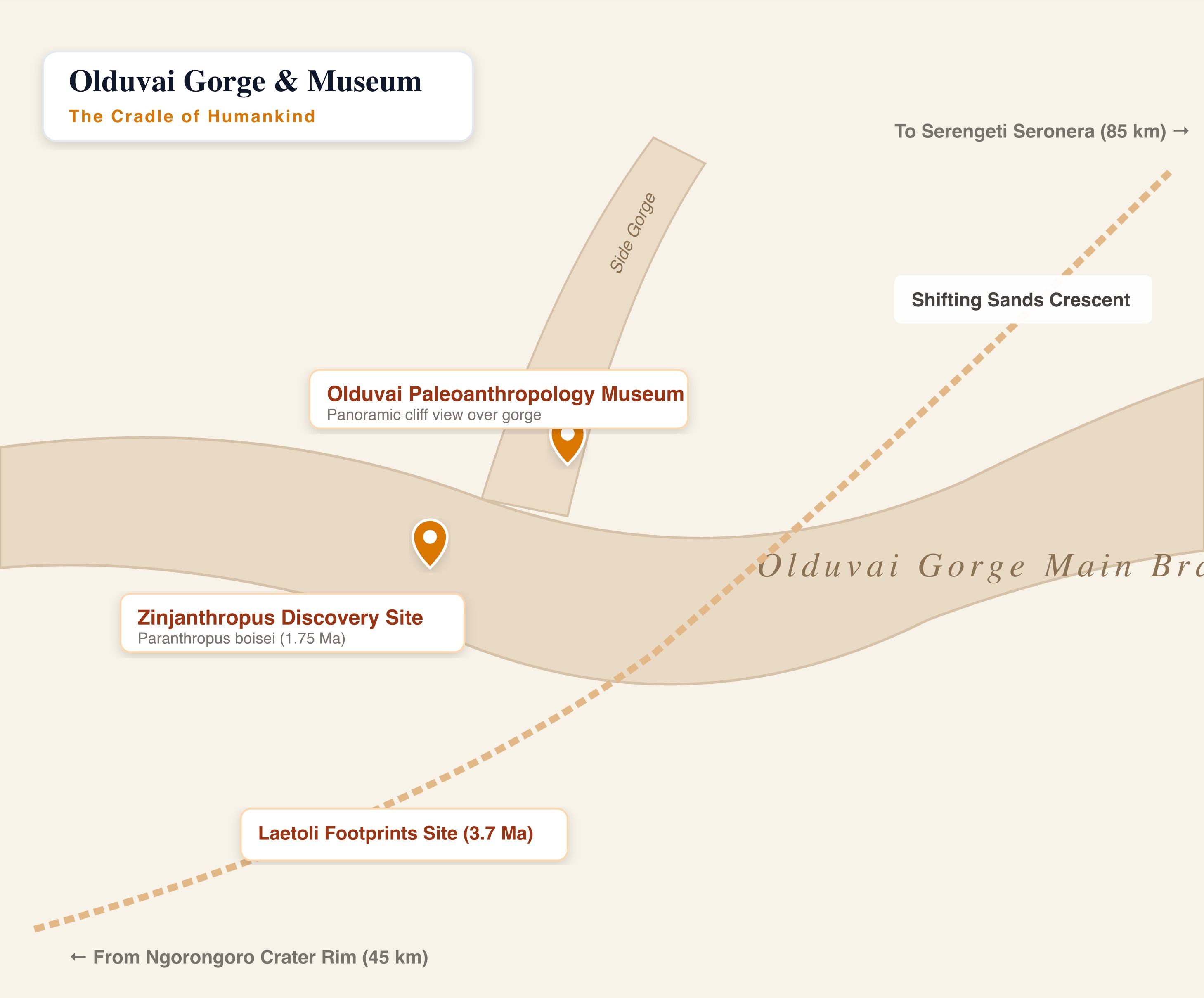
Olduvai Gorge (properly 'Oldupai', after the wild Sansevieria sisal plant that grows abundantly in the valley) is widely revered as the 'Cradle of Humankind'. Carved into the eastern Serengeti plains within the UNESCO-inscribed Ngorongoro Conservation Area, this dramatic 48-kilometer-long and 90-meter-deep steep-sided rift valley exposes a geological layer cake spanning over two million years of human evolutionary history. It was here in July 1959 that pioneering paleoanthropologist Mary Leakey unearthed the fossilized cranium of Zinjanthropus ('Nutcracker Man', Paranthropus boisei), followed shortly by the discovery of Homo habilis ('Handy Man') by Louis and Mary Leakey. Nearby at Laetoli, Mary Leakey uncovered the world-famous 3.7-million-year-old fossilized hominin footprints preserved in volcanic ash. Today, a world-class paleoanthropological museum perches on the edge of the gorge, offering visitors panoramic views across the ravine, replicas of landmark fossil finds, and access to excavation sites.
Highlights & Key Activities
- World-class Olduvai Gorge Paleoanthropology Museum & Exhibition Halls
- Site of the 1959 Zinjanthropus (Paranthropus boisei) discovery by Mary Leakey
- Cast replicas of the 3.7-million-year-old Laetoli hominin footprints
- Panoramic views across the dramatic volcanic rift ravine
- Side trip to the enigmatic Shifting Sands barchan dune of black magnetic volcanic ash
What We Love
- Incomparable paleoanthropological importance — the true 'Cradle of Humankind'
- Brand new state-of-the-art museum with panoramic open-air observation deck
- Easily combined as a half-day stop between Ngorongoro Crater and Serengeti
- Authentic hominin fossil replicas and stone tool strata visible on site
- Close to the mysterious moving Shifting Sands volcanic ash dune
Keep in Mind
- Gorge floor can become very hot and dusty during the middle of the day
- Requires Ngorongoro Conservation Area entry transit permits
- Descents to active excavation sites require a specialist ranger guide
Best Things to Do in Olduvai Gorge & Museum
Tour the Paleoanthropological Museum
Examine exhibits detailing 2 million years of human evolution, stone tools, and fossil fauna discovered in the gorge.
Guided Descent to FLK Zinjanthropus Site
Walk down into the geological strata to the exact spot where Mary Leakey discovered the famous skull in July 1959.
Laetoli Footprint Exhibition
Learn about the earliest evidence of hominin bipedalism preserved in volcanic ash over 3.6 million years ago.
Visit the Shifting Sands
Witness the crescent barchan dune composed of highly magnetized black volcanic ash that moves 17 meters per year across the desert plains.
Best Time & Climate
Olduvai Gorge can be visited year-round as part of any Northern Circuit safari itinerary. The dry months (June to October) offer dry, firm ground and clear blue skies, while the January to March calving season in the nearby Ndutu plains pairs wonderfully with an archaeological visit.
☀️ Dry Season
June to October (Mild temperatures, clear vistas, minimal mud); January to March (Warm, dry, wildebeest calving nearby)
🌧️ Wet Season
April to May (Heavy rain, green plains); November (Short rains)
Monthly Visitor Guide
Semi-arid highland plateau climate. Warm sunny days with cool nights. High UV index.
Climate Chart (Temperature & Rainfall)
Getting There
Located right along the main safari route connecting the Ngorongoro Crater Rim to Seronera in Central Serengeti. A short 5 km turnoff leads directly to the visitor center.
Driving Routes Matrix
| Route From | Distance (km) | Est. Time | Road Condition |
|---|---|---|---|
| Ngorongoro Crater Rim | 45 km | 1 hrs | Main gravel safari road through NCAA |
| Serengeti (Seronera) | 85 km | 1 hrs 50 mins | Gravel road across eastern plains |
| Arusha | 210 km | 4 hrs | Tarmac to NCAA Gate, then gravel |
✈️ Air Travel & Local Airstrips
Visitors flying into Seronera Airstrip (SEU) or Lake Ndutu Airstrip can easily visit Olduvai Gorge as a half-day excursion.
Safety, Malaria & Guidelines
Operational Advisory
Always obey local safety parameters, environmental codes of conduct, and instructions from park rangers or guides.
Olduvai Gorge is situated within the protected Ngorongoro Conservation Area and is very safe. A NCAA ranger guide accompanies visitors descending into the gorge. The floor of the ravine can be extremely hot and dry during midday; wear a sun hat, high-SPF sunscreen, and carry plenty of drinking water. Stay on established trails to preserve delicate geological fossil beds.
🦟 Malaria & Health Advisory
Malaria is present in most wildlife reserves in Tanzania. It is strongly recommended to consult a travel clinic for antimalarial prescription. Use mosquito repellent containing DEET and wear light-colored, long-sleeved clothes in the evening.
Recommended Safari Tours Visiting Olduvai Gorge & Museum
 4 Days • luxuryFrom $2,660/pp
4-Day Safari - High-End
If you only have 4 days but still want to visit the most famous parks of Tanzania (Serengeti, Ngorongoro, and Manyara or Tarangire), this is the perfe...
6 Days • luxuryFrom $2,870/pp6-Day Mid-Luxury Private Wildlife Safari & Walking Tour
On this 6-day safari, you will experience the best that Tanzania has to offer, including 2 nights in the Serengeti, home to over 3 million animals. Yo...
5 Days • luxuryFrom $2,562/pp5-Day Luxury Splendor of Tanzania's Grand Wild Safari
Embark on a 5-day journey through Tanzania's untamed beauty. Experience the epitome of luxury in the renowned Serena Hotels across Serengeti, Ngorongo...
5 Days • luxuryFrom $3,330/pp5-Day Living Among Lions - Luxury (with Four Seasons)
This is one of our most popular tours as it allows you to spend a very reasonable amount of time in the Serengeti (2 nights). You'll still have the ch...
TripAdvisor Traveler Reviews
Traveler reviews:
1. 'Humbling to stand where our earliest ancestors walked two million years ago. The new museum is world-class with stunning views over the gorge.' (Rating: 5/5, Date: June 2026)
2. 'A perfect stop on the way from Ngorongoro Crater to the Serengeti. Our guide was incredibly knowledgeable about human evolution.' (Rating: 5/5, Date: May 2026)
3. 'Don't miss the side trip to the Shifting Sands! Seeing a black volcanic sand dune moving across the plains was surreal.' (Rating: 5/5, Date: April 2026).
Configure Adventure
Add this attraction to your trip dashboard. Once added, you can customize your overall budget.
Find Stays Near Attraction
Get real-time availability and discount rates for lodges near Ngorongoro via the LiteAPI hotels engine.