 Back to Wildlife & Safari
Nyerere National Park (Selous)
Overview & Highlights
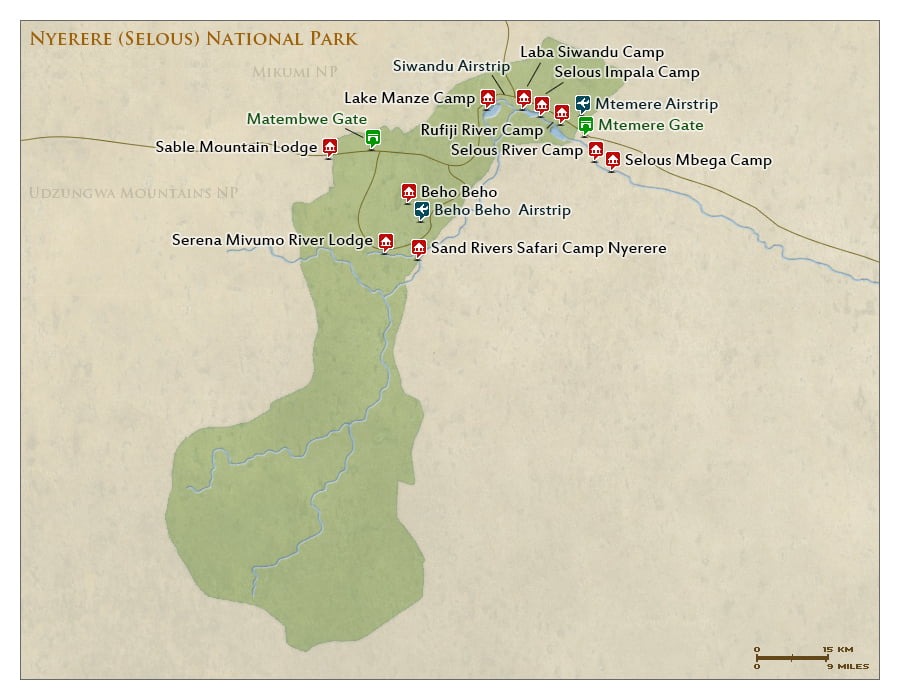
Nyerere National Park — carved from the northern section of the legendary Selous Game Reserve in 2019 — is Africa's largest stand-alone national park, spanning 30,893 km² of untamed wilderness. Bisected by the mighty Rufiji River, the park's lifeblood forms an intricate delta of oxbow lakes, palm-fringed channels, and sandbanks that attract extraordinary concentrations of hippos, giant Nile crocodiles, and waterbirds. Unlike the open savannahs of the north, Nyerere is a mosaic of miombo woodland, Terminalia forests, and floodplain grasslands, making it one of the world's premier sanctuaries for the endangered African wild dog (holding roughly a third of the continent's remaining packs). Visitors here enjoy activities rarely permitted in other national parks, including sunset boat safaris along Lake Tagalala and Lake Manze, multi-day fly-camping expeditions, and armed bush walks.
Highlights & Key Activities
- Sunset boat safaris along the Rufiji River and palm-fringed oxbow lakes
- Tracking large packs of endangered African wild dogs during their June–August denning season
- Walking safaris led by armed rangers across floodplains and sandbars
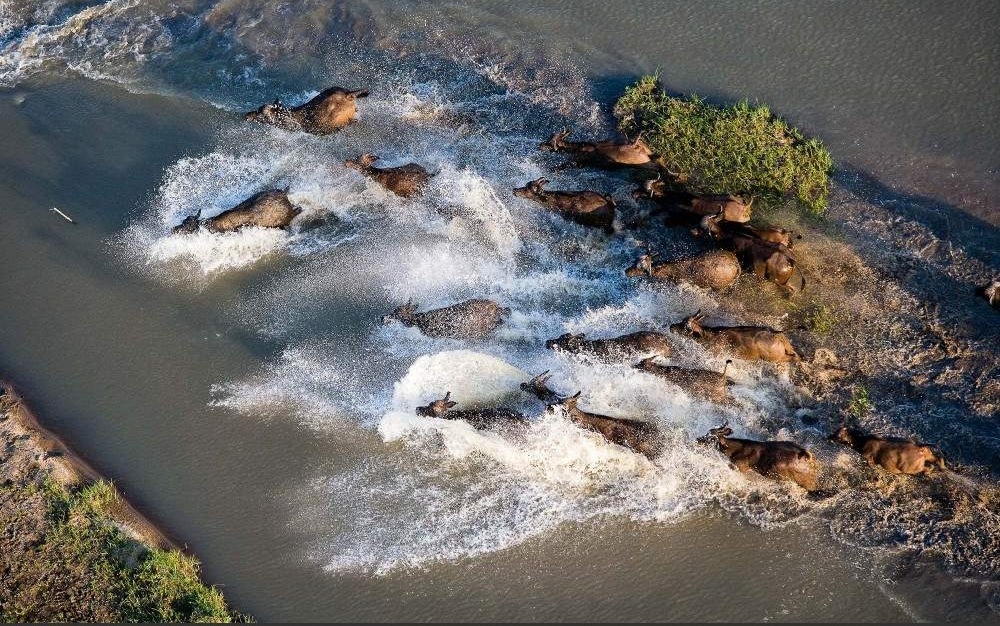
- Massive lion prides following buffalo herds around Lakes Manze, Tagalala, and Siwandu
- Natural hot springs at Maji Moto nestled in the Beho Beho hills
What We Love
- Boat safaris on the Rufiji River and oxbow lakes offer intimate aquatic wildlife viewing
- One of Africa's top strongholds for endangered African wild dogs (painted wolves)
- Walking safaris and fly-camping permitted inside the park boundaries
- Uncrowded, exclusive wilderness feel with quick 45-minute flights from Dar es Salaam
- Superb lion, hippo, crocodile, and buffalo populations around the five interconnected lakes
Keep in Mind
- High heat and humidity from October through March
- Many camps close during the heavy rains from late March through May
- Tsetse flies can be a nuisance in denser miombo woodland tracts
Best Things to Do in Nyerere National Park (Selous)
Rufiji River & Oxbow Lake Boat Safari
Glide past pods of snorting hippos, basking crocodiles, and Goliath herons while elephants and giraffes come down to drink at the water's edge.
Guided Wilderness Walking Safari
Set out at dawn on foot with an armed ranger and naturalist tracker to read spoor, inspect termite mounds, and approach wildlife downwind.
Overnight Fly-Camping Under the Stars
Sleep in lightweight mosquito-netted tents on a remote sandbank or woodland clearing, complete with campfire dining and night sounds of the bush.
Open-Sided 4x4 Game Drives
Explore the five main lakes (Tagalala, Manze, Nzerakera, Siwandu, and Mzizima) in open-sided safari vehicles designed for unobstructed photography.
Wildlife & Birds
Wildlife Highlights
- Premier destination for sightings of endangered African wild dogs
- Enormous concentrations of hippos and Nile crocodiles in the Rufiji River system
- Large lion prides frequently seen hunting in daylight hours
- Distinctive East African sable antelope, greater kudu, and Lichtenstein's hartebeest
Animal Abundance Index
Lion
CommonLeopard
OccasionalCheetah
RareElephant
CommonBlack Rhino
Very RareWhite Rhino
NoneBuffalo
AbundantZebra
CommonWildebeest
CommonHippo
AbundantGiraffe
AbundantSpotted Hyena
AbundantAfrican Wild Dog
CommonBird Watching
445+ SpeciesThe Rufiji River channels, sandbanks, and Borassus palm lagoons host extraordinary congregations of waterbirds, including African skimmers, Pel's fishing owls, and white-fronted bee-eaters.
Best Time & Climate
The dry season from June to October is the optimal time to visit Nyerere National Park. As seasonal waterholes dry up in the interior woodlands, wildlife migrates in vast numbers to the Rufiji River and its five interconnected lakes, while thinned vegetation makes spotting predators much easier.
☀️ Dry Season
June to October — Sunny days, lower humidity, and peak wildlife density around the river and lakes. June to August is also wild dog denning season.
🌧️ Wet Season
November to May — Lush green scenery and migratory bird breeding (Nov–Feb), though heavy rains in March–May render roads impassable and close most camps.
Monthly Visitor Guide
Nyerere experiences a warm tropical climate due to its low elevation. Daytime temperatures range from 28°C (82°F) in July to 35°C (95°F) in October and November before the short rains break.
Climate Chart (Temperature & Rainfall)
Getting There
Most travelers fly into Nyerere National Park from Dar es Salaam or Zanzibar (45–60 minutes) with Coastal Aviation, Auric Air, or Safari Air Link. Road transfers from Dar es Salaam or Mikumi enter via Matambwe Gate.
Driving Routes Matrix
| Route From | Distance (km) | Est. Time | Road Condition |
|---|---|---|---|
| Dar es Salaam (via Kibiti to Mtemere Gate) | 240 km | 5 hrs | Tarmac to Kibiti, then graded gravel track |
| Mikumi National Park (via Morogoro to Matambwe Gate) | 260 km | 6 hrs | Scenic mountain & bush track through Uluguru foothills |
✈️ Air Travel & Local Airstrips
Multiple daily scheduled bush flights connect Dar es Salaam (DAR), Zanzibar (ZNZ), and Ruaha National Park directly to Nyerere's airstrips.
Safety, Malaria & Guidelines
Operational Advisory
Always obey local safety parameters, environmental codes of conduct, and instructions from park rangers or guides.
Nyerere National Park is a remote, well-regulated wilderness managed by TANAPA. Visitors are accompanied at all times by licensed safari guides or armed park rangers during walking safaris. Never walk near riverbanks or lake edges unescorted, as hippos and Nile crocodiles are abundant. Because Nyerere lies at low altitude (100–400m) in a humid river basin, tsetse flies are present in woodland areas — wear neutral colors (khaki, olive, tan) and avoid dark blue or black clothing. Malaria prophylaxis and DEET insect repellent are strongly advised.
🦟 Malaria & Health Advisory
Malaria is present in most wildlife reserves in Tanzania. It is strongly recommended to consult a travel clinic for antimalarial prescription. Use mosquito repellent containing DEET and wear light-colored, long-sleeved clothes in the evening.
Recommended Safari Tours Visiting Nyerere National Park (Selous)
TripAdvisor Traveler Reviews
Traveler reviews:
1. 'Cruising down the Rufiji River at sunset surrounded by hundreds of hippos and fish eagles while elephants drank on the banks was pure magic. Zero crowds compared to the north!' (Rating: 5/5, Date: August 2026)
2. 'We tracked a pack of 18 African wild dogs on a morning drive near Lake Manze — an unforgettable sighting. Combining boat safaris, walking safaris, and game drives made every day feel completely different.' (Rating: 5/5, Date: July 2026)
3. 'Beho Beho and Sand Rivers offered world-class guiding. Fly-camping under the stars with lions roaring across the riverbed was the highlight of our trip to Tanzania.' (Rating: 5/5, Date: September 2026).
Configure Adventure
Add this attraction to your trip dashboard. Once added, you can customize your overall budget.
Find Stays Near Attraction
Get real-time availability and discount rates for lodges near Dar es Salaam via the LiteAPI hotels engine.